This post offers language that works, language that backfires, and a way to handle the most common objections without turning the session into a debate.
Why the Framing Matters More Than the Facts
Clients rarely object to medication on the evidence. They object to what they believe a referral means about them: that they are broken, that their effort did not count, that their therapist is giving up on them. If the framing does not address those meanings directly, no amount of outcome data will move the conversation. Three frames consistently keep the therapy central:
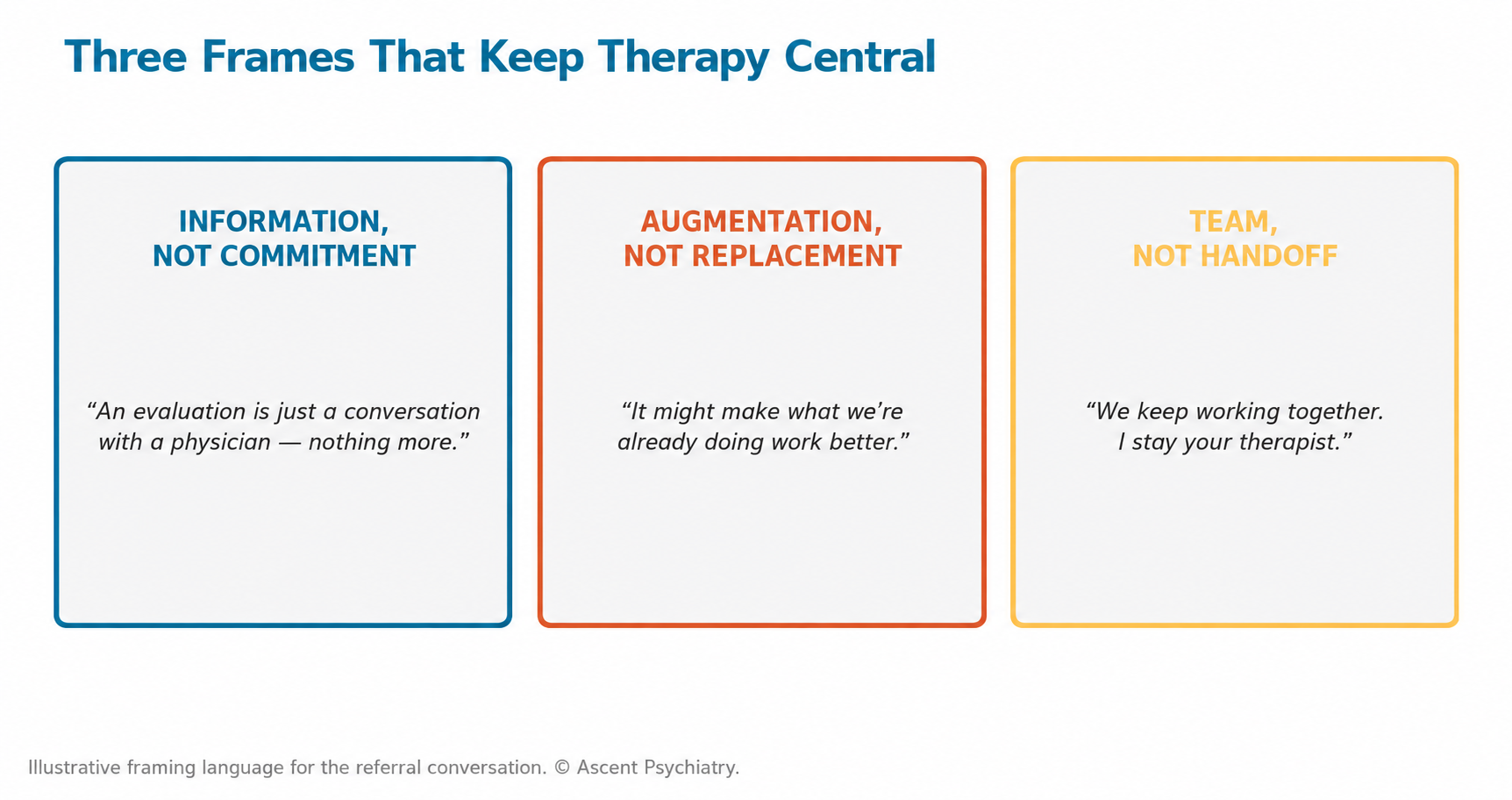
- Information, not commitment. An evaluation is a conversation with a physician — an hour of expert input on a question you and your client have been circling for months. The client decides nothing today except whether they want more information.
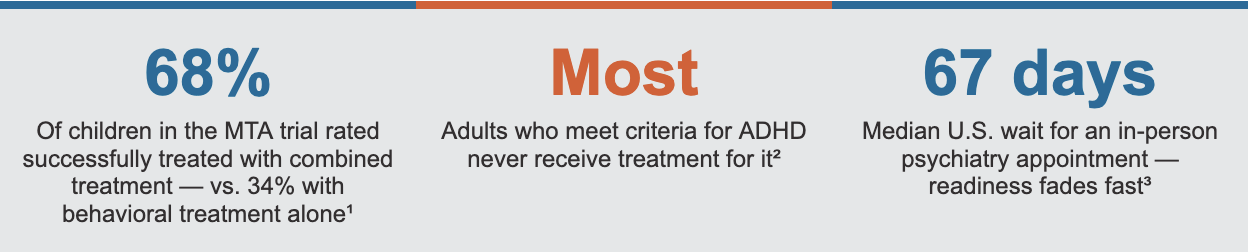
- Augmentation, not replacement. The evidence backs this framing literally. In the NIMH MTA study, combined treatment doubled the success rate of behavioral treatment alone — 68% versus 34%.¹ Medication did not replace the behavioral work; it made the behavioral work land.
- Team, not handoff. The single most reassuring sentence you can say is some version of: “I am not going anywhere.” Clients fear losing you more than they fear the appointment.
Language That Works
Notice what the framing does: it credits the client’s effort first, names the observation without judgment, positions the evaluation as serving the shared goal, and ends with a small, reversible ask. One conversation. Not a diagnosis, not a prescription, not a new identity.
- “I think you need medication.” Too conclusive. It does the psychiatrist’s job in advance and gives the client a verdict to resist rather than a question to consider.
- “There’s nothing more I can do for you.” Even when meant humbly, this reads as abandonment — and makes the referral feel like a discharge.
- “It’s just a chemical imbalance.” Oversimplified, increasingly contested, and it strips the client of agency. You do not need a mechanism story to justify a consultation.
Handling the Common Objections
- “Medication will change who I am.” Acknowledge the fear, then reframe what change means: untreated symptoms are already changing who they get to be. The goal of treatment is more access to themselves, not less.
- “If I take medication, it means therapy didn’t work.” Point gently at the evidence: combined treatment outperforms either alone in the conditions you most often refer for.¹ Two tools beat one tool. Nobody concludes a carpenter failed because they picked up a second tool.
- “I’ll think about it.” Take yes for an answer — and reduce friction. This is where the practical barrier matters: nationally, the median wait for an in-person psychiatric appointment is 67 days, and fewer than one in five psychiatrists are taking new patients at all.³ A client who agrees in March and is seen in June often is not a client who is seen at all. If you refer to a practice that can move within a week, the window of willingness stays open.
How Ascent Helps the Conversation Land
When you refer to Ascent Psychiatry, the path you describe to your client is short and concrete: they call, a dedicated Care Navigator handles all the logistics, and their first appointment — an extended one, with a physician who has more than twenty years of experience — happens within a week. With your client’s consent, you hear back after the visit. The frame you offered in session — information, augmentation, team — turns out to be exactly how the process feels.
Referring Is Simple
Have your client call (215) 876-5015 or email info@ascent-psychiatry.com and mention your name. Their Care Navigator takes it from there. If you would like to talk with Dr. Modan first, about a specific client or just to know who you are referring to, we are glad to set up a brief introduction call.